Shlokas: The Ancient Hack for Modern Student Productivity
By Atmik team | 27th January 2026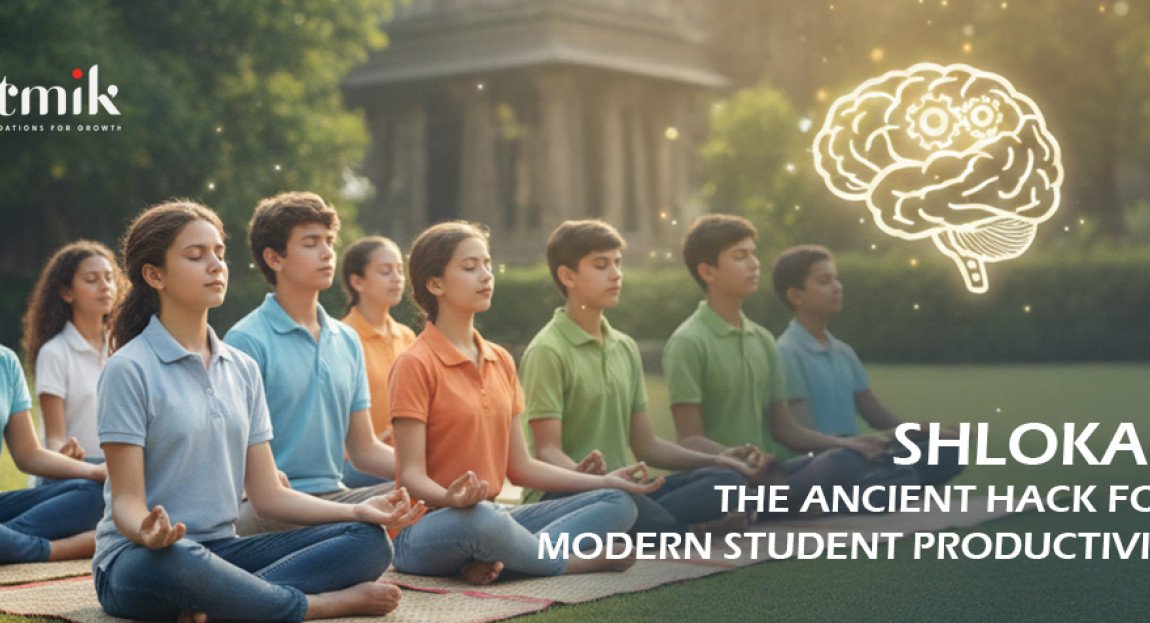
Shlokas: The Ancient Hack for Modern Student Productivity
In the whirlwind of modern education, students often grapple with a relentless barrage of distractions. From social media pings to the endless scroll, maintaining focus and achieving peak productivity feels like an uphill battle. But what if the solution wasn't a new app or a complex time management system, but rather an ancient practice refined over millennia? Enter the world of shlokas and mantras – powerful Sanskrit chants that offer a surprising and effective "hack" for modern student productivity.
Historically, shlokas were not merely religious verses; they were mnemonic devices, tools for memorization, and pathways to deeper concentration. Rooted in the rich traditions of ancient India, these rhythmic recitations were integral to the learning process, helping students grasp complex concepts and retain vast amounts of knowledge. Today, the principles behind their efficacy remain just as relevant.
At its core, reciting a shloka demands a unique blend of vocal articulation, rhythmic breathing, and mental engagement. This trifecta of activity helps to quiet the mind, much like meditation. When a student focuses on the precise pronunciation and rhythm, the incessant chatter of daily thoughts begins to subside. This process creates a mental space conducive to deep work, allowing for better absorption of study material and more effective problem-solving.
The Science of Sound and Focus
While the ancients understood this intuitively, modern science is now catching up. Studies in neuroacoustics suggest that repetitive vocalization, especially with specific frequencies and rhythms, can influence brainwave patterns. Chanting shlokas often involves slower, deeper breathing, which activates the parasympathetic nervous system, inducing a state of calm and focused alertness. This isn't about magical intervention; it's about physiological and psychological conditioning. When the mind is calm, it is inherently more receptive, leading to improved memory recall and enhanced cognitive function.
Moreover, the act of consistent shloka recitation cultivates discipline and mindfulness. In a world that constantly pulls attention in multiple directions, the dedicated practice of chanting trains the mind to resist distractions. This mental resilience is a superpower for students, enabling them to tackle challenging assignments, prepare for exams with greater clarity, and maintain prolonged periods of study without succumbing to mental fatigue.
Integrating Shlokas into Your Study Routine
Incorporating shlokas into a student's daily routine doesn't require a complete overhaul. Even a few minutes a day can yield significant benefits. Here’s how:
- Start Small: Begin with short, easy-to-learn shlokas or mantras. The Gayatri Mantra or simple chants like "Om" are excellent starting points.
- Morning Ritual: Dedicate 5-10 minutes each morning to recitation before diving into studies. This sets a focused tone for the day.
- Study Breaks: Instead of grabbing your phone, use a short shloka recitation as a mental reset during study breaks.
- Before Exams: A brief session before an exam can help calm nerves and sharpen recall.
The "ancient hack" of shlokas isn't about replacing modern study techniques; it's about augmenting them. It offers a powerful, time-tested method to cultivate inner calm, sharpen focus, and ultimately, boost academic productivity in a world that increasingly demands unwavering attention. For the modern student, embracing this ancient wisdom might just be the secret weapon to achieving academic excellence and mental well-being.
Related Posts